By NC LLC Agents Inc. · Updated November 10, 2026 · 8 minute read · North Carolina business guide
Planning to open a licensed practice in North Carolina? Whether you need a PLLC depends on the service you provide, not on whether your occupation has a licensing board.
Short version: Check that your profession is covered by Chapter 55B, get your licensing board’s approval, then file Form PLLC-02 with the Secretary of State for $125. After that you need a North Carolina registered agent and an annual report each April 15.
What is a North Carolina PLLC?
A professional limited liability company (PLLC) is an LLC organized to render professional services covered by North Carolina’s professional-entity rules. G.S. § 57D-2-02 ties the LLC statute (Chapter 57D) to the Professional Corporation Act (Chapter 55B). Unlike a regular LLC, the profession can dictate who may own the company, who may provide services, and what approval the board must give.
Covered professions include medicine, dentistry, law, accounting, architecture, engineering, registered nursing, psychology, occupational therapy and others listed in G.S. § 55B-2(6). Check your profession against the statute rather than assuming from the job title.
Licensed does not mean PLLC-eligible. The NC Physical Therapy Board says physical therapy practices cannot use “PLLC,” and the NC Board of Pharmacy says pharmacy is not a listed Chapter 55B service.
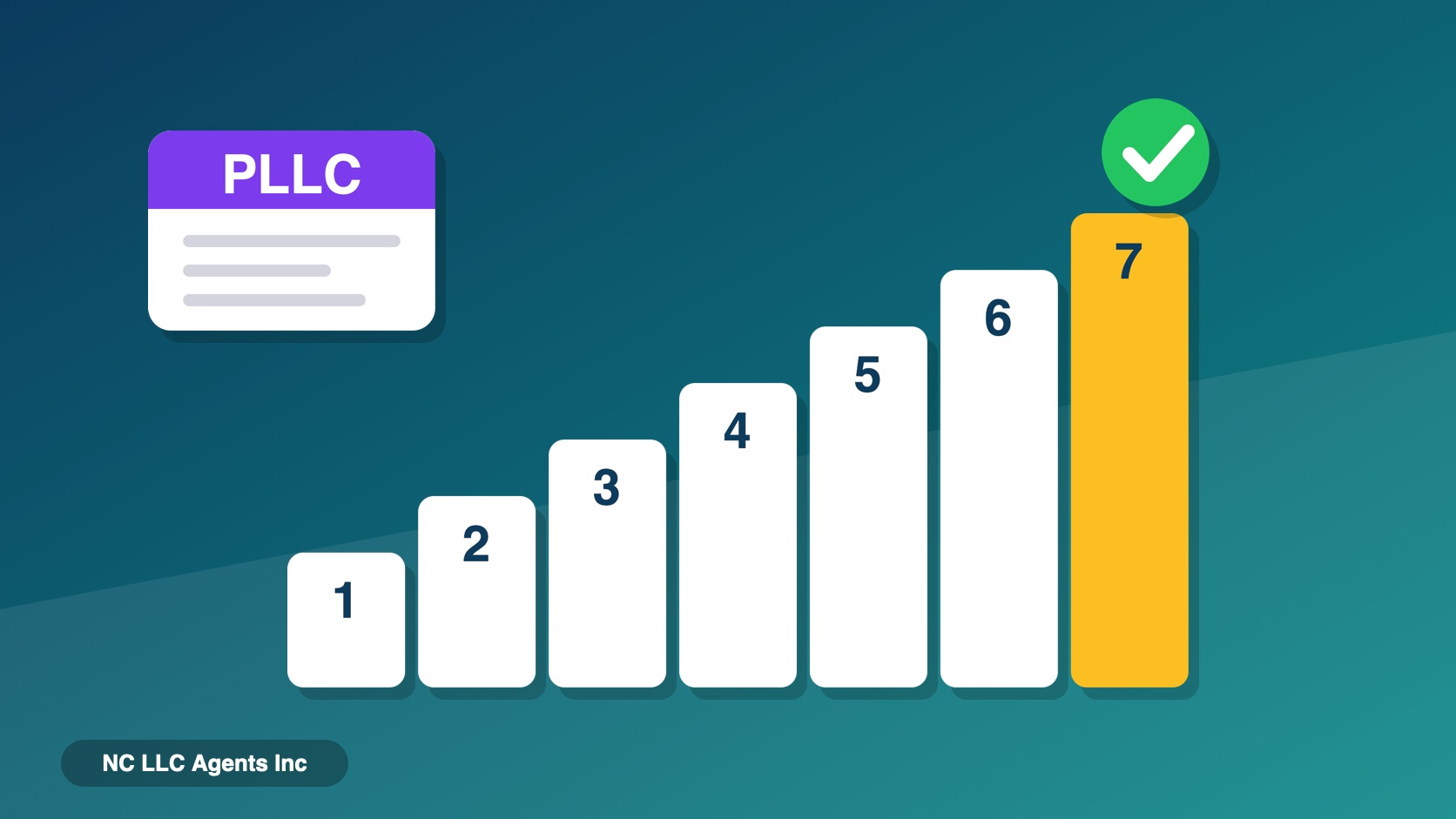
How to start a PLLC in North Carolina: 7 steps
Step 1: Confirm Chapter 55B applies
Check that the service you personally provide is in the Secretary of State’s professional-entity guidance. A physical therapy practice or pharmacy, for example, follows different entity rules.
Step 2: Confirm licenses and ownership
Verify each person’s active license and who may legally own or manage the firm. Some professions have narrow exceptions to the licensed-owner rule.
Step 3: Contact your licensing board
Ask for its business-entity application, instructions for proposed documents, the approval process, fees, and any firm-license requirement.
Step 4: Choose a compliant name
Search availability with the Secretary of State and end the name with “Professional Limited Liability Company,” “PLLC” or “P.L.L.C.” See the name-ending rules.
Step 5: File Form PLLC-02
List the organizers, the professional services, your North Carolina registered agent and office, and attach the board’s certification. The base fee is $125. See the state forms page.
Step 6: Finish setup
Keep the filed Articles, complete any firm license the board still has to issue, and adopt an operating agreement. Then get an EIN, open a business account, and check insurance and tax needs.
Step 7: Keep both registrations current
Maintain personal licenses and any firm registration, and file the annual report, normally due April 15 starting the year after formation.
What does a PLLC cost?
| Item | Fee |
|---|---|
| Domestic PLLC Articles (PLLC-02) | $125 |
| Foreign PLLC authority (PLLC-01) | $250 |
| LLC / PLLC annual report, paper | $200 |
| Annual report, online by credit card / ACH | $203 / $202 |
| Licensing board application and renewal | Varies by board |
Fees come from the Secretary of State fee pages and annual report page, checked November 2026. Board fees, insurance and taxes are separate, and so is a registered agent subscription. NC LLC Agents’ Registered Agent service is $98/year.
Frequently asked questions
Can I form a regular LLC for a Chapter 55B profession?
The Secretary of State directs covered professionals to use a professional entity, not a regular LLC. See its guidance and ask your board about your exact facts.
Does Secretary of State approval mean I can start practicing?
No. A company filing and a professional or firm license are separate. Complete your board’s process before offering regulated services.
Does a PLLC protect me from malpractice claims?
No. You stay responsible for your own professional negligence or misconduct. G.S. § 57D-2-02 treats liability for another owner’s or employee’s acts separately.
Can my registered agent address be my practice address?
Not automatically. The registered office receives service of process and official notices. Use a practice, patient-record or mailing address only where your provider and board allow it.
Do I need an EIN?
Many banks and tax filings require one. The IRS issues EINs for free.
Forming a North Carolina professional business? We can help with the state filing process and registered agent service. Your licensing board, not a registered agent, decides professional approval.
Official sources
- NC Secretary of State: Do I Need to File as a Professional Entity?
- N.C.G.S. § 55B-2: Covered professional services
- N.C.G.S. § 57D-2-02: Professional LLCs and liability
- NC Secretary of State: Domestic PLLC requirements
- NC Secretary of State: Professional LLC forms and fees
- NC Secretary of State: Professional entity name endings
- NC Secretary of State: Annual report due dates and fees
- NC Secretary of State: Maintaining registration
- NC Board of Physical Therapy Examiners: Business entities memo (2024)
- NC Board of Pharmacy: General FAQs
- IRS: Employer Identification Numbers
Educational disclaimer: This guide is not legal, tax, medical or professional-licensing advice. Fees and rules change. Verify current requirements with the North Carolina Secretary of State and your licensing board. A Secretary of State filing does not authorize anyone to practice without a license.